Pickling & Preserving on the Ashford Estate
Executive Head Chef at Ashford Castle, Liam Finnegan, tells all about what the arrival of spring means to him.
Executive Head Chef at Ashford Castle, Liam Finnegan, tells all about what the arrival of spring means to him.
As the gardens and woodlands of the Ashford Estate move through their seasonal cycle, the kitchens of Ashford Castle turn their attention to the art of preserving nature’s fleeting moments. At the centre of this thoughtful approach is Executive Chef Liam Finnegan, whose commitment to working with estate-grown and foraged ingredients has inspired a holistic philosophy of pickling, fermenting, and conserving the harvest long after its peak. In this Q&A, he reflects on the importance of preservation in extending the life of seasonal produce, the creativity behind using every part of a plant, and the ways these techniques shape the dishes served across the estate’s restaurants.
When working with estate-grown produce, how important is preservation in extending the life of seasonal ingredients beyond their peak?
Very, very important. We started what we call the Wild Food Project. What we do is work with what’s growing around us so that we can forage or grow it and process it. We pickle and preserve pretty much everything around the estate – wild garlic, nasturtium seeds, the chamomile family, wild fruits, and herbs.
We plan what we’re growing with Alex (Estate Gardener) once or twice a year, when it’s best in, and the rotation of the crops. Rather than sowing it all at once, we do it in stages so it’s ready gradually. We’ve got internal growing in the polytunnels as well, so we try to have something available all year round.
With things like the cherry blossom, it all comes out at once, so we pick it and pickle it and use the vinegar. With the blackcurrant bushes, we trim them back and use the stalks and wood to make a stock syrup. It’s all about focusing on the growing, the full holistic side of it, and then conserving not only the fruit, but the flower and the seed.

Executive Chef Liam Finnegan
With wild garlic in particular, what makes it such a special ingredient to preserve, and how do you utilise it?
Wild garlic for me would be the first sign of spring. It’s the smell, you know it straight away. I don’t focus on preserving or pickling the leaf. We use the leaf fresh – we blanch it and use it in soups so you get that lovely fresh wild garlic taste.
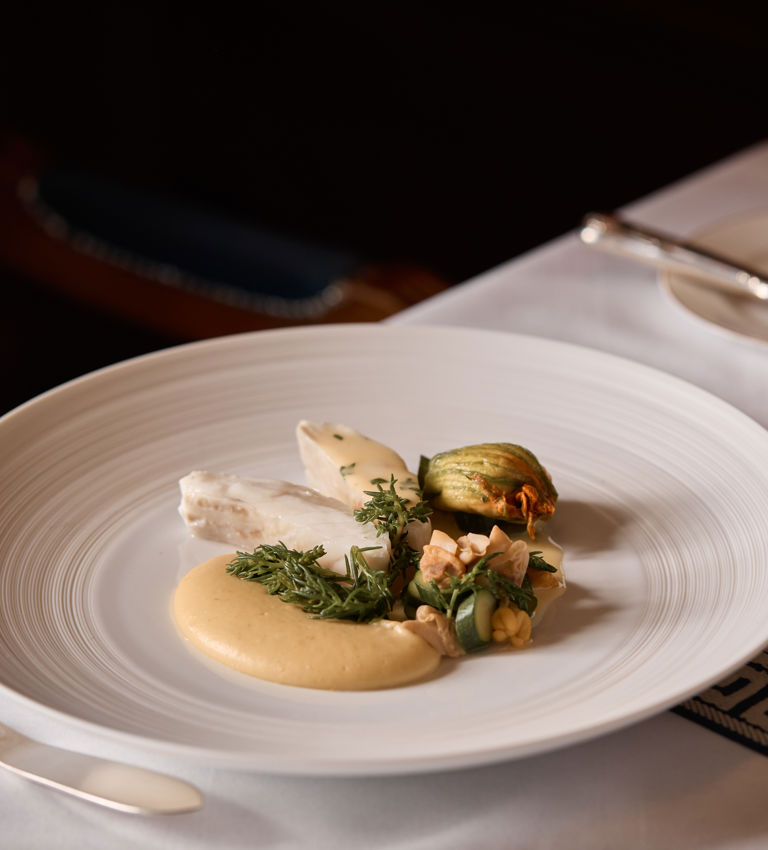
The flowers are really pungent, so you have to be careful with them. You can pickle the buds. Once it’s pollinated it becomes a seed, and we pickle the seeds. We do a couple of different pickles, but our main one would be elderflower. We make an elderflower stock syrup and do a reissue of vinegar with that, and the seeds go into it. It goes well with monkfish, turbot, shellfish, poultry, pork. We use all parts of it, but the wild garlic itself we’re popping on a daily basis and making soups daily or bi‑daily so they’re fresher and better.
Is the seasonal blackcurrant proving popular as the welcome drink for afternoon tea experiences?
The feedback is fantastic. The blackcurrant bushes are all trimmed back, so what you’ve got is the stalks and the wood. We make a stock syrup and introduce the blackcurrant stock into it. You know what you’re drinking when you’re drinking it.
For us it’s almost like a taste of what is to come. We try not to over‑sweeten it. The stock syrup is reduced, and we put organic apple juice with it to help the flavour profile. What grows together goes together: later in the season the blackcurrants and apples come at the same time, so that’s why we use the apple juice. It’s a lovely welcome drink.”

Ricotta at George V Dining Room
On the ricotta dish on the George V menu, how do you decide which vegetables are best suited to pickling, and what role does acidity play in balancing the dish?
With this dish it’s quite a cool story. We’ve got celeriac still in the garden. Root vegetables can go through the year. We do a couple of variations depending on the season. We make a meringue with salt instead of sugar and coat the celeriac, bake it, and it draws out the moisture and intensifies the flavour.
We make a walnut and truffle pesto, a caramelised celeriac purée, and then we use some of the pickles for freshness – an elderflower pickle works well. Because the ricotta is quite fresh and it’s a fat, you need something to cut through it. We do a hawthorn agrodolce, an Italian sweet and sour. If there’s a fruit through the year when we’re pickling and preserving, we introduce that into the dish.
You have to think of the balance – sweet, sour, salty – and hit all of these. Sometimes we just juice the celeriac and hit it with some of the pickling liquor. We keep it simple and focus on the best flavour that pairs with it.
What’s one simple preserving technique readers could try at home with seasonal Irish produce?
I’d say, first of all, get knowledgeable on it. Start off small and then be more adventurous.
It’s so healthy being out with Mother Nature, so good for your mental health, and it really gets you excited. Even if it’s in a salad or that wild garlic soup, you can throw little pops of the wild garlic seed through it and it’s like, “oh, what was that? That’s really interesting”.
Go with what you know and what’s around. Look up what you’re preserving and picking. It becomes an activity – we’ve got a calendar on the wall so we know when Mother Nature is going to lend itself to us. You have to flow with it.
From the first wild garlic shoots of spring to the last preserved fruits of autumn, the work happening across the Ashford Estate is a testament to a deeper philosophy: honouring nature by using every part of what it provides. Chef Liam Finnegan’s approach reminds us that preservation is not just a technique, but a way of staying connected to the land throughout the year. As the seasons shift, these thoughtful practices ensure that the flavours of the estate continue to inspire dishes long after their moment in the garden has passed.
Explore the Ashford Estate's Kitchen Gardens with our estate gardeners, Alex and Niamh. Ashford Castle’s Kitchen Garden, initiated in late 2019, spans 50 annual beds, 20 perennial beds as well as an orchard and truffle grove.
Discover more